China’s glass magnesium rock wool sandwich panel industry serves factories, warehouses, cold-storage buildings, and commercial projects worldwide. This guide introduces ten notable Chinese suppliers of Glass Magnesium Rock Wool Sandwich Panel products. It focuses on practical purchasing evidence, not promotional claims.
The evaluation considers panel structure, core density, fire performance, thermal insulation, moisture resistance, surface finish, and production capacity. It also reviews factory experience, export documentation, quality-control procedures, and customization support. Strong suppliers should provide technical datasheets, sample panels, test reports, and clear installation guidance. Details matter. A clean joint can prevent serious heat loss.
In practice, buyers should compare more than quoted prices. They need to check magnesium board thickness, rock wool orientation, steel coating, connector design, and tolerance control. Factory audits or video inspections may reveal storage conditions and production discipline. Independent verification remains valuable, because supplier information can vary in quality. Some companies communicate technical data clearly; others leave important specifications incomplete.
This ranking is therefore a starting point, not a permanent verdict. Project climate, building codes, fire requirements, and transportation distance can change the best choice. Buyers should request updated certificates and confirm whether reported performance applies to the complete panel system. A reliable supplier listens carefully, answers directly, and accepts reasonable technical scrutiny. That is not always easy. Yet careful comparison can reduce installation delays, material waste, and long-term maintenance risks.
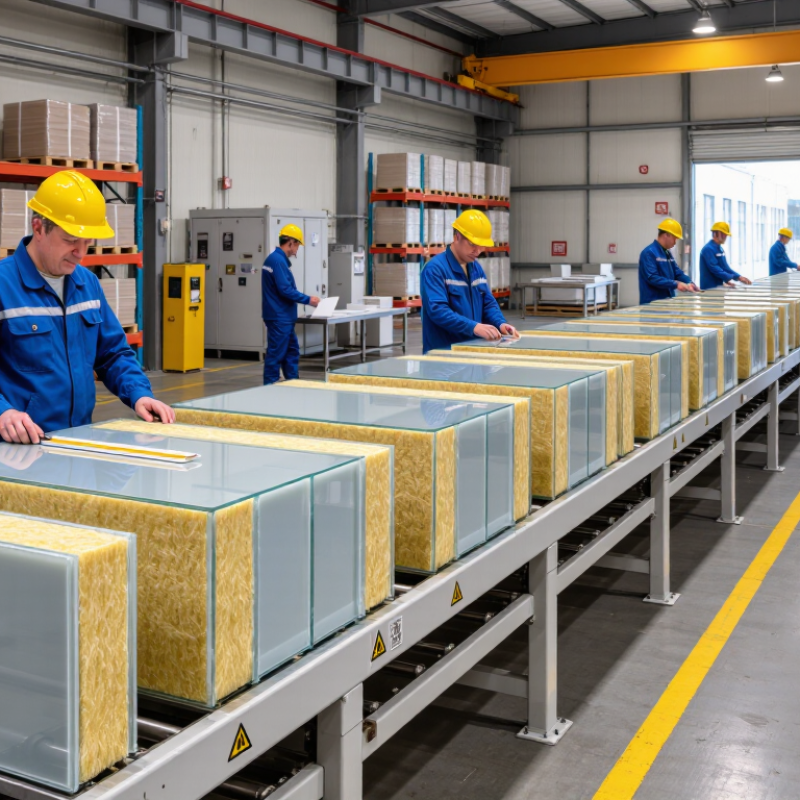
Glass magnesium rock wool sandwich panels combine rigid outer skins with a mineral wool core. The skins usually contain magnesium oxide, magnesium chloride, reinforcing fibers, and lightweight fillers. Between them, dense rock wool provides the main thermal and acoustic barrier. A factory bonding process holds the layers together. Pressed edges may include tongue-and-groove joints for faster installation.
The glass magnesium boards offer a hard, flat surface. They also resist impact better than many thin sheet materials. Rock wool slows heat transfer and helps reduce airborne noise. Its non-combustible mineral composition supports fire-resistant wall and ceiling assemblies. However, performance depends on thickness, density, joint design, and tested system details. A panel alone cannot guarantee a specific fire rating.
On site, installers should keep panels dry and protect exposed edges. Small gaps around doors can weaken the entire enclosure. Mechanical fixings need proper spacing and corrosion resistance. Uneven framing may create visible waves after installation. This is easy to underestimate. Cutting also produces dust, so controlled handling and suitable protective equipment matter. Designers should check local requirements, moisture exposure, wind loads, and insulation targets before selection. The practical weakness is not always the core. Poor sealing, careless transport, or rushed joints can reduce the panel’s real value. Testing documents and installation records provide stronger evidence than attractive product claims.
Evaluating China’s top glass magnesium rock wool sandwich panel suppliers requires more than comparing prices. Start with the panel structure, including the glass magnesium board, rock wool core, adhesive, and joint design. Request samples with clear thickness and density labels. Measure them independently with a caliper and scale. Small differences can affect installation and fire performance.
Reliable suppliers should provide recent, traceable test reports from qualified laboratories. Check fire resistance, thermal conductivity, sound insulation, moisture resistance, and load performance. Do not accept certificates with unclear testing dates or missing product specifications. Ask how the factory controls core density, board flatness, adhesive coverage, and curing time. A factory audit can reveal practical details, such as clean storage areas and protected panel edges.
Production experience also matters. Request references for projects using similar climates, building heights, and installation methods. Confirm monthly capacity, quality inspection records, packaging methods, and realistic delivery schedules. A written warranty should explain exclusions and response procedures. Samples may look excellent, yet mass production can vary. That risk deserves attention. I would inspect random finished panels, not only showroom pieces. Communication quality is another useful signal. Precise answers, complete drawings, and prompt corrective action often indicate stronger technical management. Still, no supplier is flawless. Leave room for independent inspection and rethink any decision based only on the lowest quotation.
China’s top ten glass magnesium rock wool sandwich panel suppliers are often compared by product strength, not factory size alone. The strongest suppliers usually combine fire-resistant rock wool cores with moisture-tolerant glass magnesium boards. Their panels serve workshops, warehouses, cold rooms, and clean production areas.
Several suppliers focus on high-density rock wool for better fire performance and sound absorption. Others develop lightweight panels for faster installation and lower transport costs. Some provide concealed joints, reinforced edges, and customized thicknesses from roughly 50 to 150 millimeters. Good suppliers can share core-density data, thermal conductivity results, and recent test reports. Ask for batch samples. Paper performance is not enough.
The leading ten also differ in practical service. One group may offer strong export packaging, with corner protection and moisture barriers. Another may specialize in fire-rated doors, ceiling systems, and matching accessories. Some support large projects with cutting plans and installation guidance. Their weaknesses deserve attention too. Delivery may slow during peak construction seasons. Color consistency can vary between batches. A careful buyer should confirm panel flatness, board bonding, joint tolerance, and after-sales response before signing. Supplier rankings can change as equipment, materials, and quality systems improve.
Typical technical benchmarks used across Chinese supplier offerings. Values represent commonly specified product ranges rather than company-specific data.
Rock wool sandwich panels generally emphasize fire resistance, thermal insulation, acoustic performance, and structural durability. Typical specifications include rock wool core densities of 80–150 kg/m³, thermal conductivity of 0.036–0.048 W/m·K, fire resistance of 60–120 minutes, sound reduction of 25–40 dB, and glass magnesium facing thicknesses of 5–12 mm.
China’s top 10 glass magnesium rock wool sandwich panel suppliers should be judged by production evidence, not catalog claims. Reliable manufacturers normally operate under ISO 9001 quality systems and provide traceable records for raw materials, bonding agents, and steel skins. Their panels should match declared requirements under applicable standards, such as EN 13162, EN 13501-1, ASTM C612, or ASTM E84, depending on the project market.
Factory quality control should cover more than appearance. Inspectors need to check core density, panel thickness, flatness, compressive strength, moisture resistance, and joint accuracy. During production, calibrated equipment should record adhesive spread, curing temperature, and lamination pressure. Random samples should undergo fire, thermal conductivity, and dimensional tests through qualified laboratories. Certificates must show product scope, test methods, dates, and issuing bodies.
Details matter. A clean cutting line is useful. So is consistent tongue-and-groove alignment. Suppliers should retain batch numbers and inspection reports for every shipment. Independent factory audits can expose weak storage practices, damaged edges, or inconsistent rock wool density. A certificate alone can mislead. Some documents may cover a different panel structure or thickness. This is where buyers must slow down and verify.
Quality is never perfectly uniform. Human handling still creates small variations. Top suppliers acknowledge those limits, document corrective actions, and improve controls instead of hiding defects. That honesty is a stronger sign of reliability than polished marketing language.
China’s top glass magnesium rock wool sandwich panel suppliers should be compared through delivered cost, not factory price alone. Rock wool density, panel thickness, facing steel grade, fire performance, and order volume can change quotations quickly. Freight also depends on container availability, port selection, and seasonal demand. A low quotation may exclude testing, pallets, export packing, or destination charges. That assumption is risky.
UNEP’s 2023 Global Status Report states that buildings consume about 30% of global energy and produce approximately 26% of energy-related emissions. This supports demand for better insulated envelope systems, but buyers should verify thermal conductivity and declared performance. Request production samples, batch records, and independent fire-test documents. For export projects, confirm compliance with EN 13501-1, ASTM E84, or applicable national standards. Customs descriptions and product certificates must match the shipped specification. Details matter.
Customization usually covers core density, panel length, joint design, surface coating, color, and accessory profiles. Suppliers with engineering support can reduce installation waste, especially around doors, corners, and roof penetrations. However, customized molds or nonstandard dimensions may require minimum order quantities and longer lead times. We still check those terms in writing. International buyers should compare Incoterms, warranty scope, replacement procedures, and inspection rights before payment. Industry reports provide useful direction, but they cannot replace factory audits, sample testing, and a realistic landed-cost calculation.
| Rank | Supplier Profile | Typical Panel Structure | Common Thickness Range | Rock Wool Density | Indicative FOB Price | Customization Options | Typical MOQ | Estimated Lead Time | Export Service Considerations | Quality and Compliance Documents |
|---|---|---|---|---|---|---|---|---|---|---|
| 1 | Supplier Profile A | Glass magnesium board skins with a bonded rock wool core; concealed or exposed joint options. | 50–150 mm | 100–140 kg/m³ | US$18–35/m² | Panel length, color-coated or plain surface, edge profile, joint design, openings, and accessory packages. | 500–1,000 m² | 15–25 days | Suitable for containerized export; confirm seaworthy packaging, fumigation requirements, and loading plan before order. | Product data sheet, test reports, fire-performance documentation, packing list, commercial invoice, and certificate of origin where required. |
| 2 | Supplier Profile B | High-density rock wool core between glass magnesium cement boards, designed for thermal and acoustic applications. | 50–200 mm | 110–160 kg/m³ | US$20–39/m² | Core density, board thickness, fire-rated assembly, surface finish, tongue-and-groove joints, and cut-to-size service. | 300–800 m² | 20–30 days | Offers export quotations on FOB or CIF basis; verify destination port handling charges and insurance scope. | Technical specifications, SDS for applicable materials, dimensional inspection record, and third-party test reports on request. |
| 3 | Supplier Profile C | Fire-resistant sandwich panel using inorganic glass magnesium facings and vertically or horizontally arranged rock wool. | 60–180 mm | 90–140 kg/m³ | US$17–33/m² | Custom panel length, coating color, surface embossing, fire-door matching, flashings, trims, and installation hardware. | 500 m² | 18–28 days | Can consolidate panels and accessories in one shipment; request moisture protection for long-distance sea transport. | Factory inspection checklist, fire test documentation, packing photographs, certificate of origin, and export customs documents. |
| 4 | Supplier Profile D | Flat glass magnesium sandwich panel with a non-combustible mineral wool core for industrial and commercial buildings. | 50–150 mm | 100–150 kg/m³ | US$19–36/m² | Surface color, panel module, edge treatment, core grade, fastener layout, trims, and project-specific shop drawings. | 800–1,500 m² | 15–22 days | Best suited to repeat project orders; confirm container utilization because panel length affects freight efficiency. | Material certificates, production inspection records, fire classification evidence, and installation instructions. |
| 5 | Supplier Profile E | Glass magnesium board faced panel with rock wool insulation and optional reinforced joints for cleanroom or partition use. | 50–120 mm | 100–130 kg/m³ | US$21–40/m² | Cleanroom-compatible surfaces, anti-static requirements, special dimensions, door and window cut-outs, and matching ceiling panels. | 300–600 m² | 20–35 days | Request confirmation of surface protection film, dust-control packaging, pallet limits, and destination-country labeling rules. | Technical data sheet, surface inspection report, fire and acoustic test results where available, and quality assurance records. |
| 6 | Supplier Profile F | Structural sandwich panel with reinforced inorganic facings and a dense rock wool core for wall and roof systems. | 75–200 mm | 120–160 kg/m³ | US$23–44/m² | Load requirements, roof or wall profile, panel length, color, joint configuration, trims, gutters, and engineering support. | 500–1,000 m² | 25–35 days | Obtain structural calculations for wind and snow loads; confirm whether engineering documents are included in the quotation. | Load-bearing data, fire-performance reports, dimensional tolerances, material certificates, and installation manuals. |
| 7 | Supplier Profile G | Economical glass magnesium and rock wool panel for internal partitions, warehouses, workshops, and temporary facilities. | 50–100 mm | 80–120 kg/m³ | US$15–29/m² | Basic color selection, panel length, surface finish, edge profile, standard flashings, and simplified accessory kits. | 1,000–2,000 m² | 12–20 days | Competitive for full-container orders; clarify minimum order value, spare-panel allowance, and damage-claim procedures. | Basic product specification, packing list, commercial invoice, certificate of origin, and standard inspection report. |
| 8 | Supplier Profile H | Premium fire-resistant panel with carefully bonded rock wool and moisture-resistant glass magnesium facings. | 75–180 mm | 110–150 kg/m³ | US$24–46/m² | Enhanced fire assembly, acoustic specification, low-emission surface requirements, custom joints, and project color matching. | 300–700 m² | 25–40 days | Suitable for specification-driven projects; independently verify fire ratings for the complete wall or roof assembly, not only the panel. | Third-party fire and acoustic reports, factory quality records, product warranty terms, and batch traceability documents. |
| 9 | Supplier Profile I | Modular sandwich panel with inorganic facings and rock wool insulation for prefabricated buildings and site offices. | 50–150 mm | 90–140 kg/m³ | US$18–34/m² | Modular dimensions, prefabricated openings, integrated trims, color combinations, corner details, and assembly drawings. | 500–1,200 m² | 18–30 days | Confirm compatibility with local modular-building standards, container loading sequence, and on-site installation support. | Assembly drawings, product data sheet, inspection report, packing documentation, and available fire-performance test evidence. |
| 10 | Supplier Profile J | Project-order glass magnesium rock wool panel with flexible specifications for industrial enclosures and cold-area buildings. | 50–200 mm | 100–160 kg/m³ | US$20–42/m² | Panel geometry, insulation thickness, density, surface finish, joint sealing, flashings, fasteners, and project packaging. | 400–900 m² | 20–35 days | Request a complete export package covering Incoterms, container loading, moisture barriers, replacement policy, and after-sales response time. | Technical data, material declaration, fire test report where applicable, pre-shipment inspection records, and export documentation. |
| Pricing is indicative for standard configurations on an FOB China basis and may vary according to raw-material costs, panel dimensions, surface finish, core density, order volume, testing requirements, packaging, and destination-port conditions. Fire ratings and compliance should be verified for the complete tested assembly and the regulations applicable in the importing country. | ||||||||||